
As organizations use GraphAware Hume to tackle increasingly complex intelligence challenges, the right analysis tools matter as much as the analysis itself.
With GraphAware Hume 3.2, we’re introducing new capabilities to give teams greater visibility into data access, make workflow development easier, and put more control in administrators’ hands.
Here’s what’s new.
Know what data analysts access with improved logging
For organizations working with sensitive intelligence, knowing what an analyst searched for is only part of the picture. Existing logs can show who performed an activity, when it happened, and what they did. But understanding exactly what data was returned gives organizations a more complete record of what an analyst was able to see.
GraphAware Hume 3.2 introduces Data Access Auditing, extending that visibility to the results returned through Search, Advanced Expand and graph widgets in Action Boards. This gives organizations a clearer record of data access, helping them detect and deter inappropriate use, provide evidence during internal investigations or regulatory reviews, and demonstrate that analysts accessed data legitimately and in the context of their work.
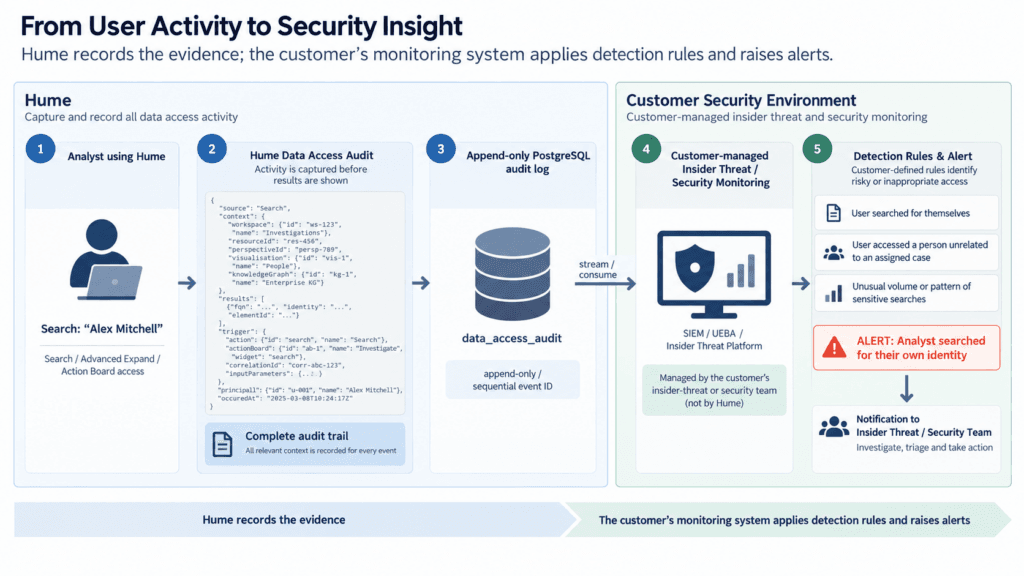
Logging happens before results reach the analyst, so the audit trail accurately records the results they received. Audit records reference the data rather than storing the full data itself, helping organizations maintain a complete record without duplicating the underlying data.
Customers can also control how long audit data is retained, while automated partitioning helps manage the volumes of data stored over time.
Make Python workflow development easier
Building efficient data pipelines often involves writing Python code, testing, and refining as you go. In GraphAware Hume 3.2, we’ve made that process simpler.
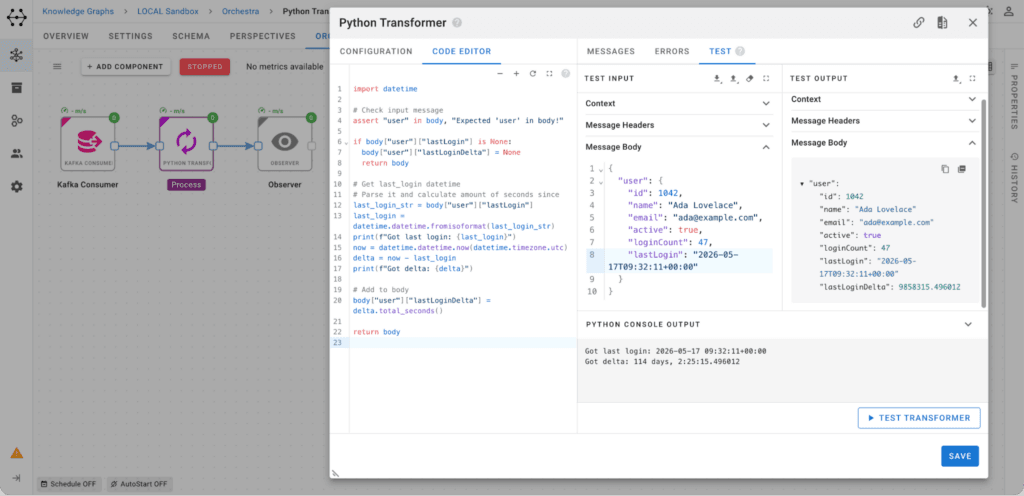
Orchestra Python testing introduces a dedicated Test tab for Python Transformers, allowing users to test their code directly within the component without running the full workflow.
Users can provide a test input and immediately see the result, along with any console output or errors. Changes can be tested without first saving the code, making it quicker to iterate and troubleshoot as you work.
You can also send a real message from either the Messages or Errors tab directly into a test. This makes it easier to reproduce and investigate issues using real workflow messages.
More control over snapshot sharing
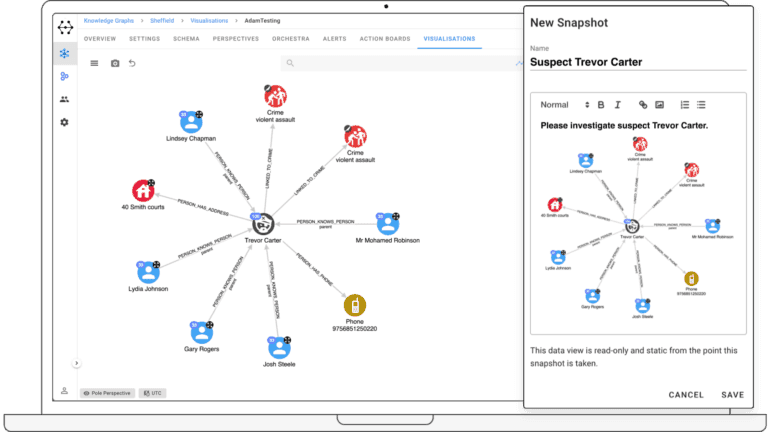
Sharing snapshots can be useful when collaborating on investigations, but not every organization wants users to be able to create shareable links.
GraphAware Hume 3.2 introduces an option to disable snapshot link-sharing, giving administrators greater control over how snapshots are shared.
Previously, users could generate a shareable link for snapshots they had created themselves. With this new option, organizations can disable snapshot link-sharing altogether when they need tighter control over how investigation data is shared.
Get started with GraphAware Hume 3.2
GraphAware Hume 3.2 brings greater visibility into data access, a simpler way to develop Python workflows, and more control over snapshot sharing.
Ready to see what’s new? Get in touch with our team to explore GraphAware Hume 3.2.