
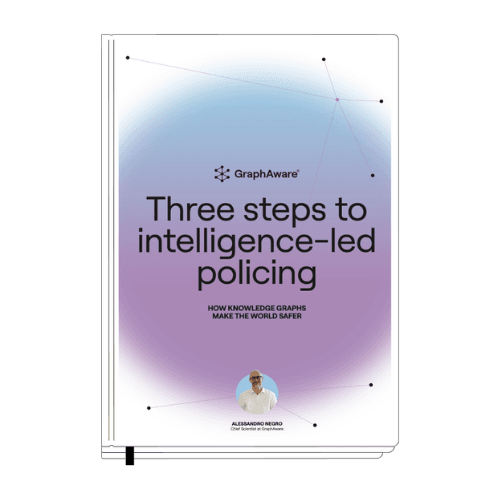
Discover the power of knowledge graphs for criminal intelligence analysis
Without a comprehensive data analysis system, law enforcement agencies cannot operate at their peak efficiency. Investigations involve sifting through multiple, varied data sources, each with its unique structure and access methods.
The knowledge graph approach to intelligence-led policing bridges data silos, providing a comprehensive structure to data and a single view of intelligence. Many agencies still lack the software and tools for adequate data analysis, emphasizing the need for effective techniques.
Drawing on our experience, this e-book outlines a three-step approach to using knowledge graphs for criminal intelligence analysis and intelligence-led policing.
Understand how intelligence agencies organize, compile, and query vast amounts of varied data rapidly, opening up a realm of limitless possibilities for further analysis and applications such as intelligence automation or pattern recognition.
The 2nd edition of this e-book was expanded to include information on how LLMs and generative AI can improve investigative outcomes.
Since the first edition, large language models have rapidly evolved into a mature technology, ready to uncover new insights and make investigations more efficient. You can explore the potential applications of LLMs in the text boxes embedded throughout each chapter.
Author: Alessandro Negro, Chief Scientist at GraphAware